
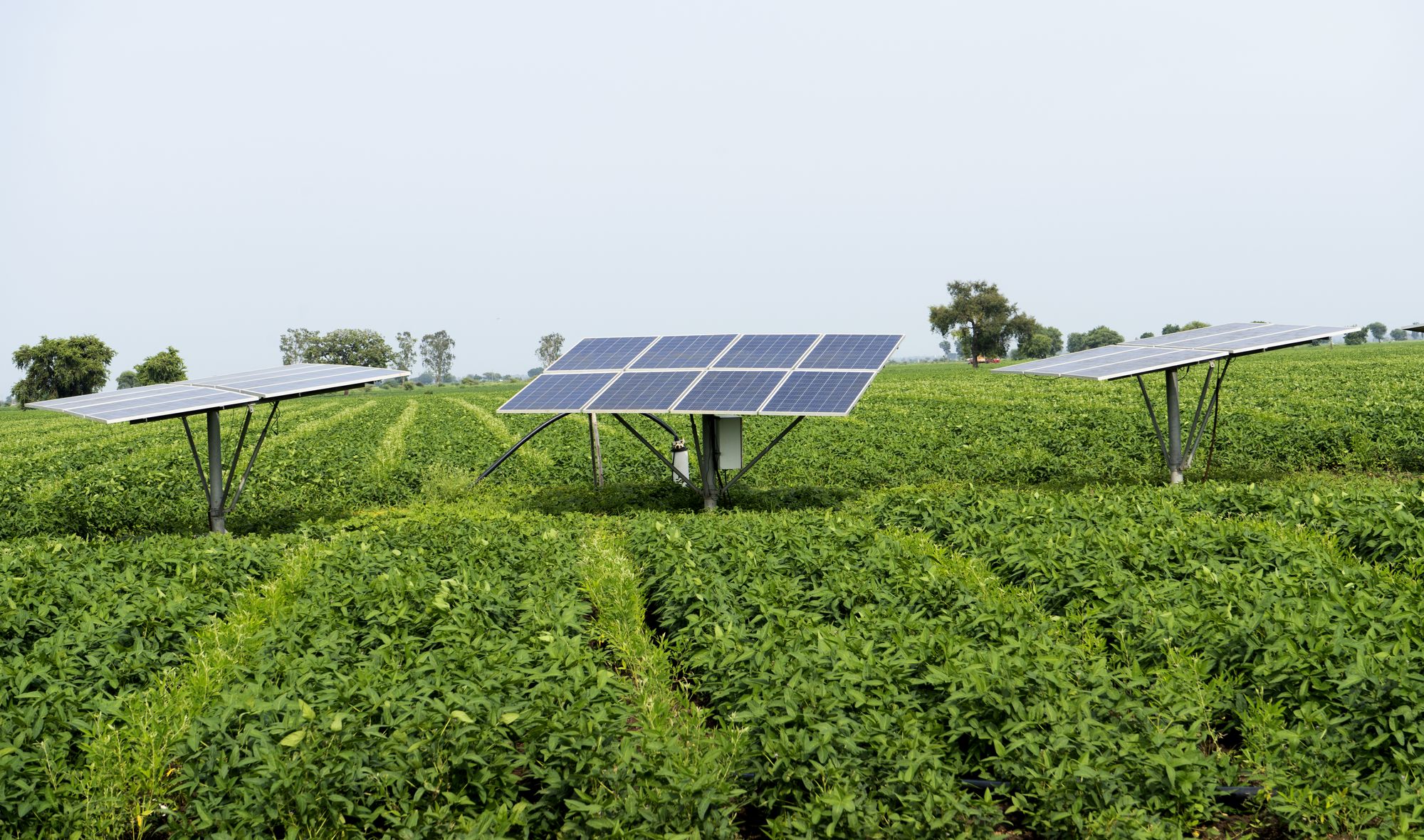
What If the Farm Could Power the Future? The Case for Agrivoltaics
Key takeaways
- Agrivoltaics combines solar power generation with active farming on the same land.
- More than 90% of new utility-scale renewable capacity added in 2025 was cheaper than the cheapest new fossil-fuel option (IRENA).
- Solar irrigation has raised farm incomes in India by at least 50% and lifted smallholder yields in Rwanda by about a third (FAO and IRENA).
New York has launched its $10 million Sun and Soil program, supporting agrivoltaics, the integration of solar energy with active farmland. The goal is compelling: preserve productive agriculture while creating another source of energy and income from the same land.
As CEO of Elite Global Equity Fund, I keep coming back to one principle: the future will require us to think differently about how we use land, water, energy and technology.
Renewable energy is now an economic decision
Renewable energy is no longer simply an environmental discussion; it is increasingly an economic one. IRENA reports that more than 90% of new utility-scale renewable capacity added globally in 2025 generated electricity at a lower cost than the cheapest new fossil-fuel alternative. Utility-scale solar averaged $44/MWh and onshore wind $33/MWh.
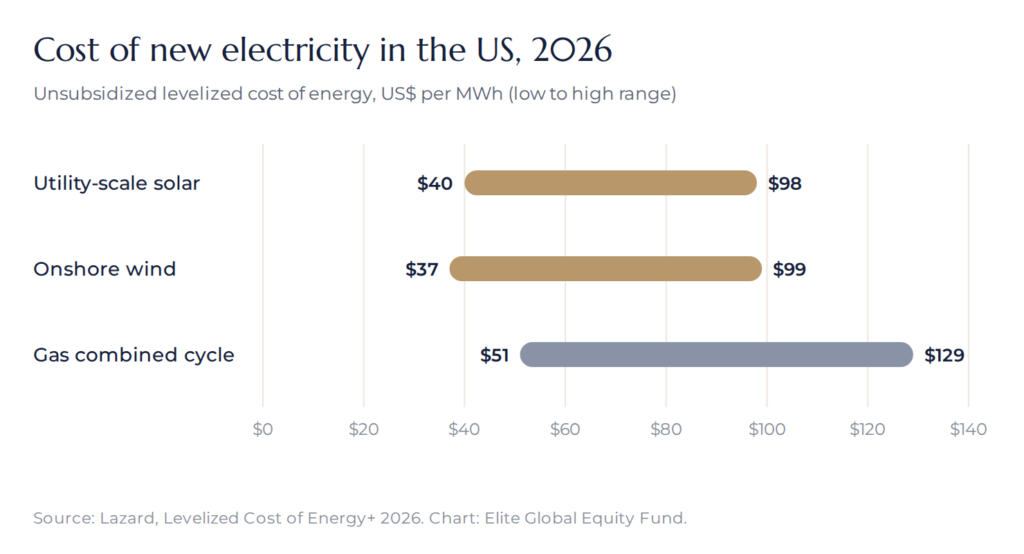
In the United States, Lazard’s 2026 analysis puts unsubsidized utility-scale solar at $40–$98/MWh and onshore wind at $37–$99/MWh, compared with $51–$129/MWh for a new gas combined-cycle plant. Those financial calculations still don’t reflect the full environmental cost of fossil generation.
Food or energy? Agrivoltaics suggests we can have both
At the same time, we are seeing growing debate in the United States about using farmland and other land resources for massive AI data centers and the enormous energy infrastructure required to support them. Perhaps the answer isn’t choosing food or energy. Perhaps it is learning how to produce both.
What solar-powered agriculture has already delivered
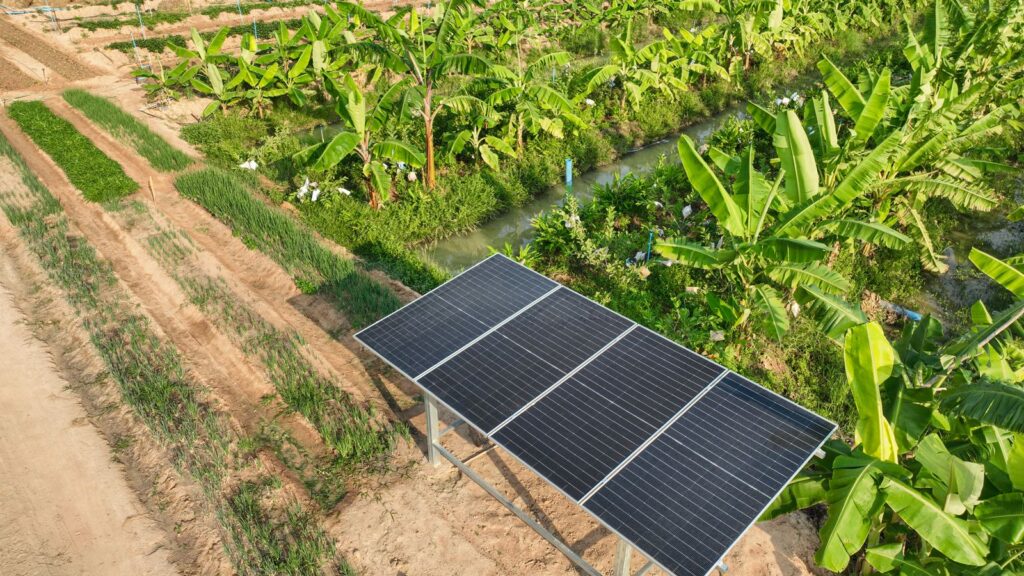
IRENA and FAO have already documented some remarkable examples. In India, solar irrigation pumps have increased farmers’ incomes by at least 50% compared with rain-fed agriculture. In Rwanda, smallholder farmers using solar-powered irrigation have increased yields by about a third.
And the innovation is continuing. Ethiopia’s HaFAS program (Harmonized Digital Fertilizer and Agronomic Solutions) gives farmers site-specific fertilizer and agronomy recommendations, and independent evaluations have recorded wheat yield gains of 16–38%. In 2025, digital platforms such as FarmerChat delivered this kind of advice to around 49,000 farmers.
Solar above crops, along canals and on reservoirs
These examples suggest a different way forward. Solar can sit above crops, run alongside canals and waterways, float on reservoirs and power irrigation. Precision agriculture adds another layer: data and sensors tell farmers exactly when and where to apply water, nutrients and inputs, driving productivity and yield.
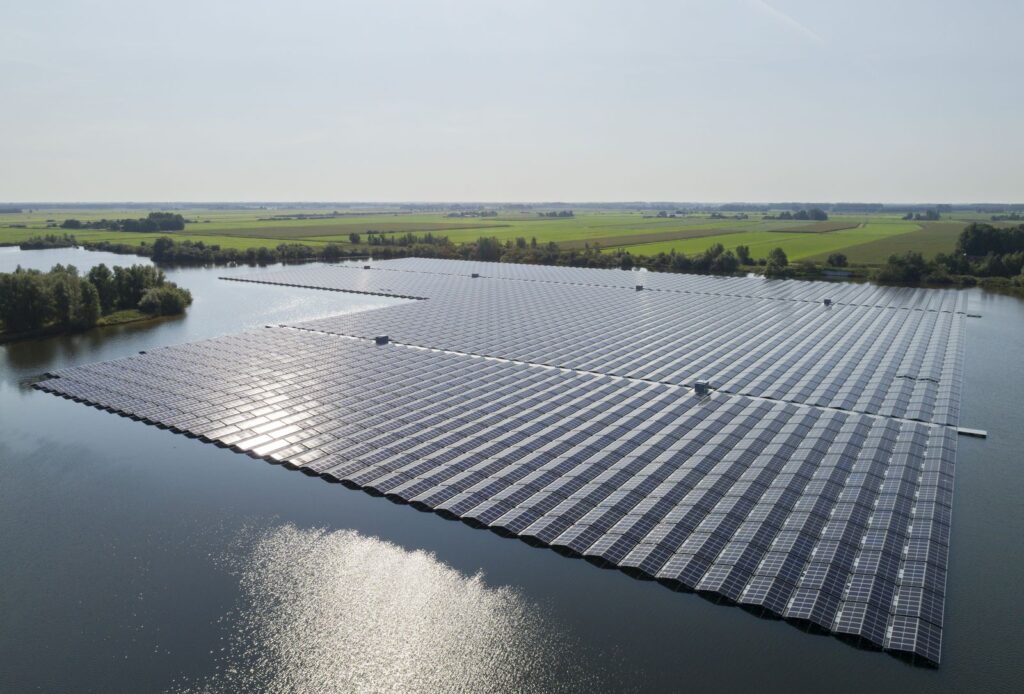
We don’t necessarily need more land. We may need to make the land we already have more productive.
The investment case for agrivoltaics
At Elite Global Equity Fund, we see an investment opportunity at the intersection of renewable energy, agriculture, water, technology and real assets, in line with our focus on sustainable agriculture and carbon reduction. The objective isn’t to put a solar panel on every farm. It is to find the right balance for each location, protecting productive farmland while creating new sources of energy, income and economic resilience.
The next generation of agriculture may not be about choosing between food and energy. It may be about producing both, more intelligently, more sustainably and on the same land.
Frequently asked questions
What is agrivoltaics?
Agrivoltaics is the use of the same land for solar power generation and agriculture at the same time. For example, solar panels can be mounted above crops or on land used for grazing, so the land keeps producing food while it generates electricity.
Is solar power cheaper than fossil fuels?
In most markets, yes, for new-build projects. IRENA reports that more than 90% of new utility-scale renewable capacity added in 2025 was cheaper than the cheapest new fossil-fuel option, with utility-scale solar averaging $44/MWh and onshore wind $33/MWh.
How does solar power help farmers?
Solar can power irrigation, cut energy costs and create a second source of income from the same land. FAO and IRENA found that solar irrigation pumps raised farmers’ incomes in India by at least 50% compared with rain-fed agriculture, and lifted smallholder yields in Rwanda by about a third.
Why is Elite Global Equity Fund interested in agrivoltaics?
Elite Global Equity Fund sees an investment opportunity where renewable energy, agriculture, water, technology and real assets meet. The aim is to find the right balance for each location: protecting productive farmland while creating new sources of energy, income and economic resilience.
Don Nissanka
CEO, Elite Global Equity Fund
This article reflects the author’s views and is provided for information only. It is not investment advice or an offer to buy or sell any security or fund interest.
Leave a Reply
You must be logged in to post a comment.